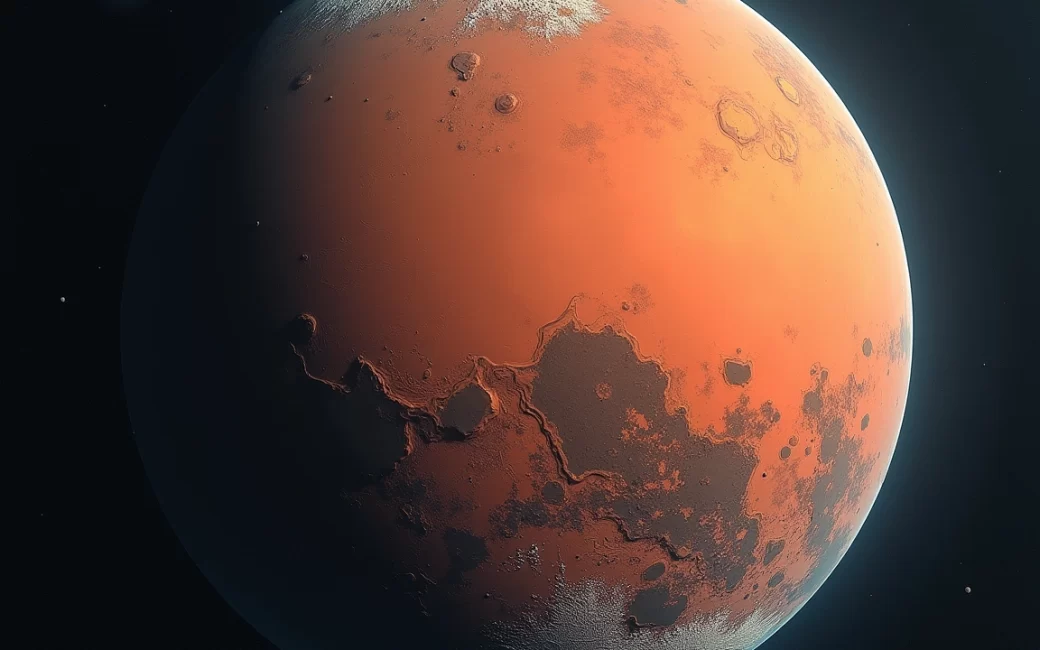
A collapsing cloud of gas and dust forms the Sun
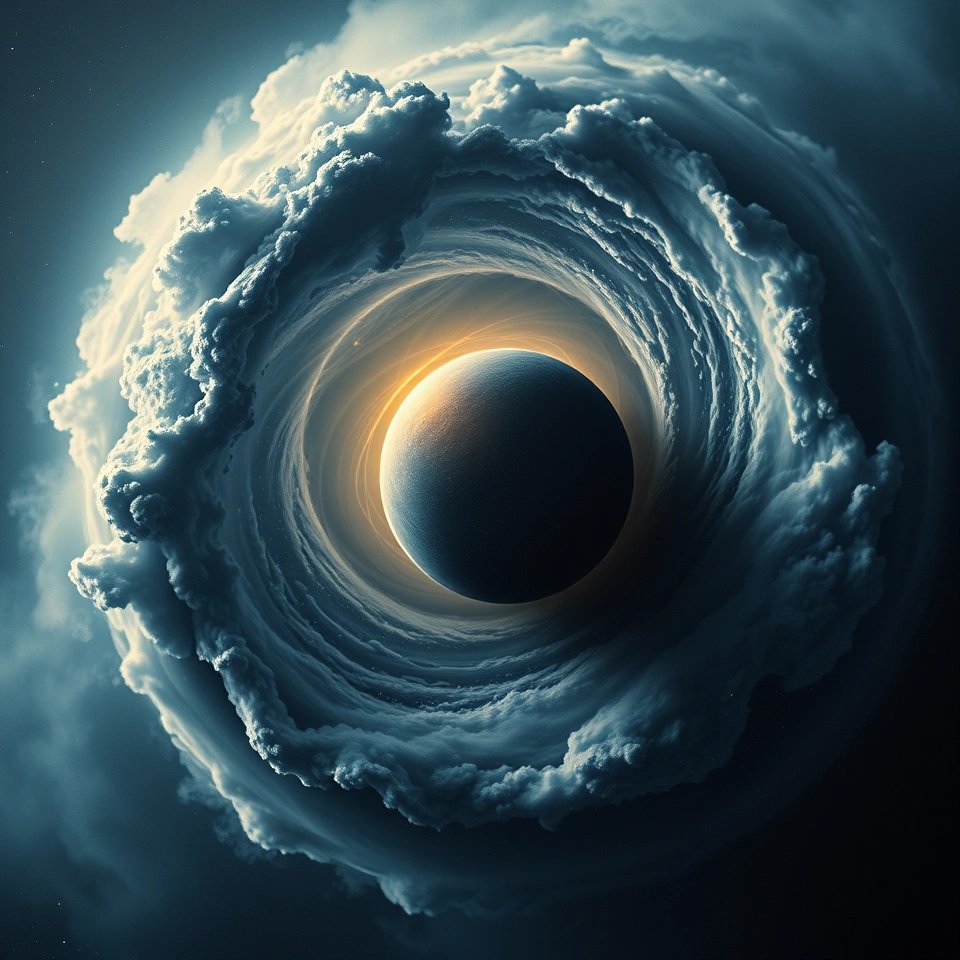
The Sun formed roughly 4.6 billion years ago when a dense region within a molecular cloud collapsed under its own gravity, spinning faster as it contracted and flattening into a disk of gas and dust around a growing protostar at the centre. Most of the cloud's mass ended up in the Sun itself, and the leftover material in the surrounding disk became the raw stock for everything else in the solar system.
That leftover material didn't stay as scattered dust. Grains stuck together, then clumped, then collided and merged over millions of years, building up into planets, moons, asteroids and icy bodies at different distances from the new star. Close to the Sun, heat drove off light gases and left rocky material behind, which is why Mercury, Venus, Earth and Mars are dense, small, and made of rock and metal, while the outer disk stayed cold enough to hold onto hydrogen and helium, producing the gas and ice giants further out.
The Sun's gravity is what ties this whole arrangement together: every planet, moon, asteroid and comet follows a closed path — an orbit — set by the pull of the Sun's mass at the centre. Nothing in the disk that survived to the present day escaped that grip; it either fell into a stable orbit or was ejected long ago.
Asteroids and many comets are useful precisely because they mostly missed out on the melting and reprocessing that reshaped the planets. They are unaltered leftovers from the disk, so their composition is closer to the original mix of material the solar system formed from, which is why missions keep returning to them rather than only studying the planets.
Telescopes find many round bodies beyond Neptune similar to Pluto
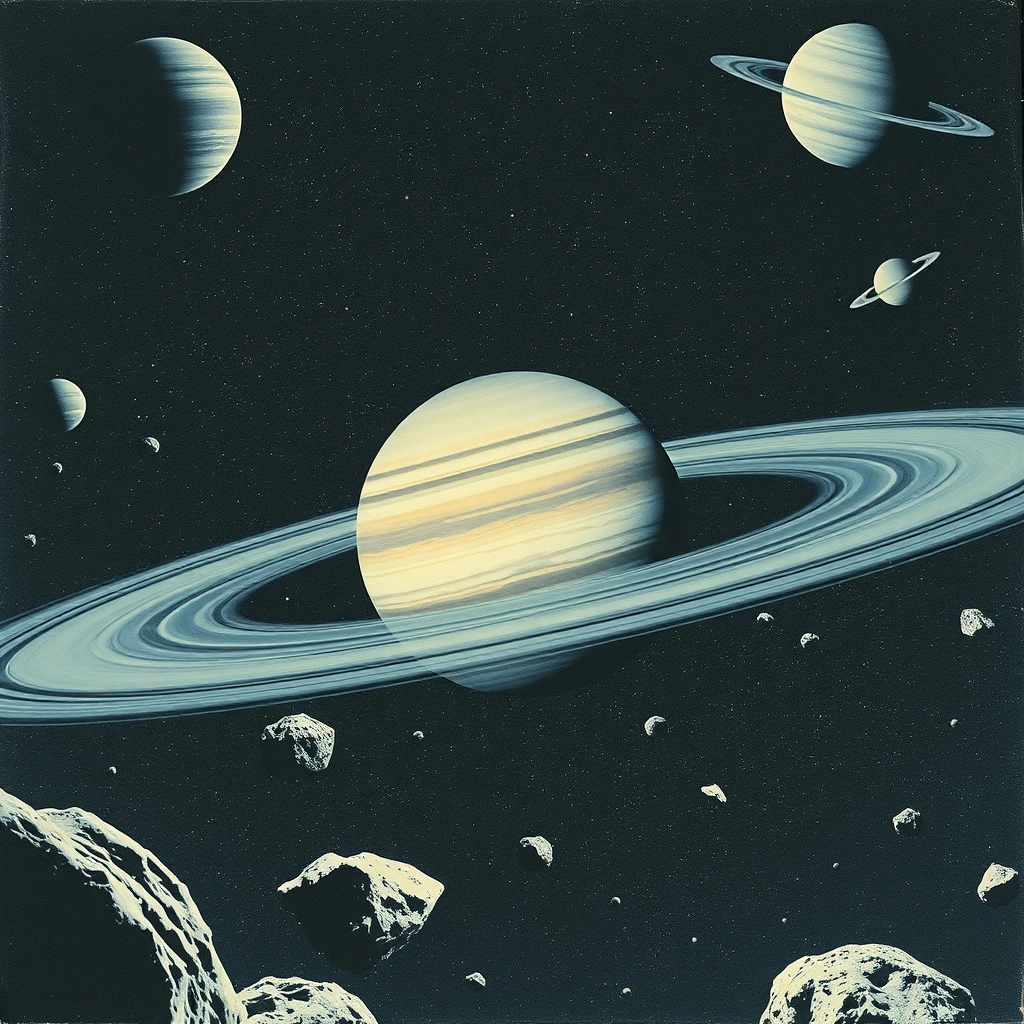
Wide-field surveys beyond Neptune, in the region called the Kuiper Belt, kept turning up icy, roughly spherical bodies comparable in size to Pluto through the early 2000s. If every one of those counted as a planet, the tally of planets would have kept climbing well past nine as instruments improved and searches went deeper.
That prospect forced the question of what a planet actually is. In 2006 the International Astronomical Union adopted a formal definition: a planet must orbit the Sun, be massive enough for its own gravity to pull it into a round shape, and have cleared other debris out of the neighbourhood of its orbit. Objects that meet the first two conditions but share their orbital zone with lots of comparable-sized debris are classified as dwarf planets instead.
Pluto fails the clearing test — it shares its orbital region with a swarm of other Kuiper Belt objects — so it was reclassified as a dwarf planet rather than the ninth planet, leaving eight planets in the solar system, as described in Mars's own entry in the broader planetary context. The same three-part test applies to Ceres, in the asteroid belt, and to Eris, further out than Pluto: both are round and orbit the Sun, but neither has cleared its neighbourhood, so both are dwarf planets rather than planets. Reader-facing confusion about "8 versus 9 planets" almost always comes down to this clearing criterion, not a dispute about size or roundness.
An icy body from the Kuiper Belt or Oort Cloud is nudged onto an orbit that brings it near the Sun
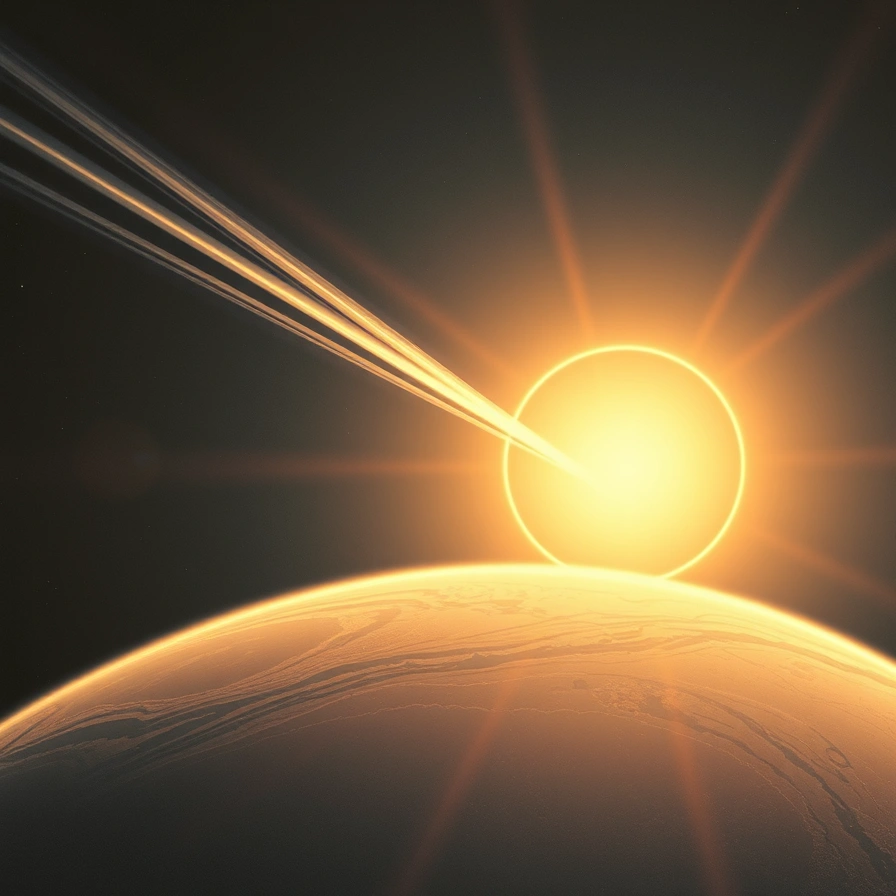
Comets start out as chunks of ice and dust sitting in the cold outer reaches of the solar system — either the Kuiper Belt just beyond Neptune or the far more distant Oort Cloud. A gravitational nudge, often from a passing star or a close encounter with a planet, can shift one of these bodies onto a long, elongated orbit that eventually carries it in toward the Sun.
As it approaches, solar heating begins to vaporise the ices at and near the surface. That escaping gas, dragging dust with it, forms the glowing coma around the nucleus and the tail that always points away from the Sun, pushed by radiation pressure and the solar wind rather than trailing behind the comet's direction of travel. It's this visible activity — not size or composition alone — that separates a comet from an asteroid: asteroids are rocky or metallic bodies, mostly confined to the belt between Mars and Jupiter, that don't develop a coma or tail because they hold little or no volatile ice to vaporise.
A planet's mass and radius set its surface gravity
Surface gravity depends on how much mass a planet has and how far that mass is from the surface — a bigger radius spreads the same mass thinner and weakens the pull, while more mass packed into a similar radius strengthens it. Mars is both smaller and considerably less massive than Earth, and the combination leaves it with substantially weaker surface gravity.
NASA's Mars fact sheet lists Mars's surface gravity at about 3.7 m/s², against Earth's roughly 9.8 m/s² — Mars pulls at a little over a third of Earth's strength. That ratio is exactly what a reader needs to convert their own weight:
Weight on Mars = Weight on Earth × (Mars surface gravity ÷ Earth surface gravity)
For a person who weighs 70 kilograms' worth of force on Earth, multiplying by roughly 0.38 gives a Mars weight equivalent to about 26–27 kilograms' worth of force — the same mass, just pulled on far more gently. The same formula works for any body once its own surface gravity figure is known; only the ratio changes.
Weaker gravity has a second consequence beyond weight: it makes it harder for a planet to hold onto a thick atmosphere, because gas molecules need less energy to reach escape velocity and drift off into space over geological time. That's a large part of why Mars now has such a thin atmosphere compared with Earth's, and why its surface conditions look so different despite Mars orbiting in a region of the solar system not drastically colder than Earth's.
Solar System
The Solar System is the Sun together with every object bound to it by gravity — the eight planets, their moons, the dwarf planets, and the asteroids, comets and other debris left over from the disk that formed them all. Everything in that inventory follows an orbit set by the Sun's mass at the centre, from Mercury's tight loop to comets that swing out to the edge of the Oort Cloud and back.
Where the Solar System actually ends is less clean than it sounds. The heliosphere — the bubble of solar wind and magnetic field the Sun projects outward — marks one boundary, the Kuiper Belt's outer edge marks another, and the Oort Cloud, a spherical shell of icy bodies thought to extend enormously further out, marks a third. These aren't the same boundary measured three ways; they are three different physical features that happen to get used interchangeably as "the edge," and which one is meant depends on whether the conversation is about solar wind, about Kuiper Belt objects, or about the source of long-period comets.
Earth
Earth is the reference point every other planet gets measured against — its size, gravity, atmosphere and surface conditions are the baseline for describing how different Mars, Venus or any other body actually is. Earth's surface gravity of roughly 9.8 m/s² and its thick, oxygen-rich atmosphere are what make direct comparisons to Mars useful: they're the two numbers that explain why the same person weighs less on Mars and why Mars's air can't support the same kind of pressure or surface warmth Earth's does.
Mars
Mars is the most visited planet in the solar system after Earth itself, the target of dozens of orbiters, landers and rovers because it's close enough to reach with current propulsion and similar enough in structure to make direct comparison meaningful. It's a rocky, roughly half-Earth-sized planet with a thin atmosphere, a cold and dry surface, and a reddish colour that comes from iron oxide — rust — coating much of its dust and rock, as NASA's Mars overview describes.
Because Mars lies just outside Earth's orbit rather than deep in the outer solar system, missions can reach it in a matter of months rather than years, which is a large part of why it dominates the exploration record among the planets beyond Earth.
Atmosphere
An atmosphere is the layer of gas a planet or moon holds onto by gravity, and it's the single biggest factor in what a surface actually experiences — pressure, temperature swings, weather, and whether liquid water can exist on the surface at all. Earth's atmosphere is thick enough to trap heat, hold breathable oxygen and support stable surface liquid water; Mars's atmosphere is around a hundred times thinner, made mostly of carbon dioxide, and does none of those things well, which is why its surface is so much colder and drier despite receiving meaningfully less sunlight than Earth but not an extreme amount less.
What are 5 facts about Mars?
Mars is a small, cold, reddish planet fourth from the Sun, and its basic profile is easy to summarise:
- Its reddish colour comes from iron oxide, or rust, coating much of the surface dust and rock, as NASA's Mars fact sheet describes
- A day on Mars runs close to 24 hours 37 minutes, only slightly longer than an Earth day, per NASA's Mars fact sheet
- Its surface gravity is about 3.7 m/s², roughly 38% of Earth's, so the same mass weighs far less there, per the same fact sheet
- It has two small moons, Phobos and Deimos, thought to be captured asteroids rather than formed alongside the planet
- Its atmosphere is thin and mostly carbon dioxide, which is why it can't retain surface heat the way Earth's atmosphere does
Can humans live on Mars?
Not currently, and not without substantial life-support infrastructure: Mars has no breathable atmosphere, surface pressure too low for liquid water or unprotected human survival, and average temperatures far below freezing. Any human presence would depend on sealed habitats, imported or manufactured oxygen, and protection from radiation that Mars's thin atmosphere and weak magnetic field no longer shield against the way Earth's do.
The habitability question people actually mean by this — is there or was there ever life on Mars — is still open rather than answered. What would count as settling it is specific: a detection of biosignature gases or organic patterns that can't be explained by non-biological chemistry, ideally confirmed by more than one instrument or mission and reproduced independently. That's the bar current and planned rover missions, sample-return efforts and orbital spectroscopy are aimed at clearing, not a single ambiguous chemical reading.
How long is a day on Mars?
A Mars day, called a sol, lasts about 24 hours and 37 minutes — close enough to an Earth day that mission planners can run rover schedules on something like a familiar clock, but long enough that the offset accumulates and has to be tracked deliberately. NASA's Mars fact sheet lists Mars's rotation period at this figure, which is why mission teams operating rovers on Mars time gradually drift out of sync with Earth clocks over the course of a mission.
A Mars year is a separate figure entirely: because Mars orbits farther from the Sun than Earth does, its year runs to roughly twice the length of an Earth year, so a Mars sol and a Mars year don't share the same simple relationship Earth's day and year do.
Can it get hot on Mars?
Yes, in a narrow sense. NASA's Mars fact sheet lists Mars's temperature range as roughly 20°C at the equator on the warmest summer days down to about -153°C at the poles in winter, so brief daytime warmth at the equator is real but far from typical. The same location that reaches 20°C by day can fall to well below freezing after sunset, because there's so little atmosphere to hold the heat in.
The swing between day and night on Mars is so extreme largely because its thin atmosphere can't hold onto daytime heat the way Earth's thicker atmosphere does — there's little insulation to keep warmth from radiating straight back out once the sun sets, which is the same atmospheric property that rules out unprotected human survival on the surface.
For a reader trying to place a specific date — an unusually close approach, a rare multi-planet alignment, a claim circulating online about what will be visible on a given day — the arithmetic behind it comes from the same orbital mechanics covered above: each planet's orbital period, combined with its current position, determines how often it lines up with another body as seen from Earth, and how rare that particular configuration actually is. Checking one of these claims means finding the orbital period of each planet involved and working out how long it takes their positions to repeat, rather than taking the circulated date on faith.